The short answer
Box breathing has four equal steps: breathe in for 4 seconds, hold for 4, breathe out for 4 and hold for 4, for 2 to 5 minutes. It slows your breathing to under four breaths a minute and can help you feel calmer. It is popular but barely studied: in the one trial, a different exercise worked better.
On this page
At a glance
- Rhythm
- In for 4, hold for 4, out for 4, hold for 4
- How long
- 2 to 5 minutes
- Position
- Sitting upright, feet flat on the floor
- Good for
- Calm downSport and fitness
- Evidence
- Weak evidence
- Take care
- If you are pregnant, or have a heart or lung condition, use shorter holds (1 or 2 seconds) or leave them out. Never practise breath-holds in water.
Breathe along
Box breathing
Press start and follow the circle
- Breathe in4s
- Hold4s
- Breathe out4s
- Hold4s
3.8 breaths a minute, 16 seconds a breath
3:00 left
How to do it
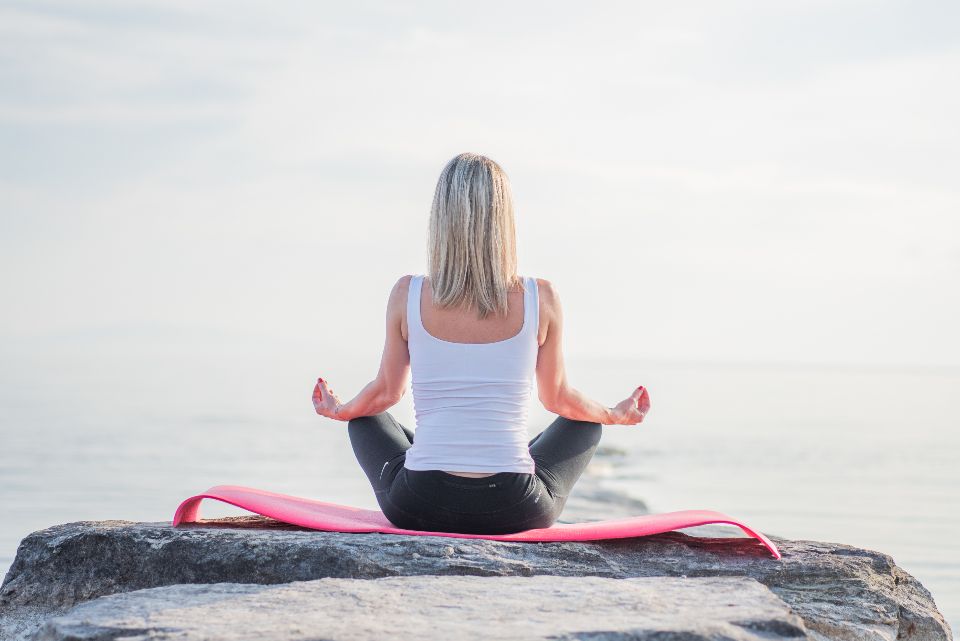
- Sit upright with your feet flat on the floor and your hands in your lap. Breathe out fully.
- Breathe in through your nose for a count of 4.
- Hold the breath in, without straining, for a count of 4.
- Breathe out through your mouth or nose for a count of 4.
- Hold with your lungs empty for a count of 4.
- Repeat for 2 to 5 minutes. If 4 feels too long, start with 3 and build up.
How it should feel
Steady and focused. The holds should feel like a pause, not a struggle. If you are gasping when you breathe in again, the count is too long for you.
Stop if
You feel dizzy, light-headed or tingly, or your chest feels tight. Stop, breathe normally and let it pass.
From breathingexercises.uk/exercises/box-breathing/. Free to print and share for personal and clinical use. Information only, not medical advice: if you have a health condition, check with your GP, nurse or physiotherapist before starting.
What is box breathing?
Box breathing is a simple counted pattern: breathe in, hold, breathe out, hold, each for the same count. At 4 seconds a side, one breath takes 16 seconds, so you breathe less than four times a minute, compared with the 12 to 20 breaths a minute that are normal at rest. Counting gives your mind something to hold on to, which is part of why people find it useful when stressed.
When should you use it?
Before something stressful, such as an exam, a presentation or a difficult call, or to settle yourself during the day. Two to five minutes is enough. Many people find the holds help them concentrate; others find holding the breath makes them more anxious. If that is you, try resonance breathing or cyclic sighing, which have no holds.
What the research shows
Box breathing has been tested in one randomised trial. Stanford researchers asked 108 healthy volunteers to do 5 minutes a day of box breathing, cyclic sighing, cyclic hyperventilation or mindfulness meditation for a month. All three breathing exercises improved mood. Cyclic sighing, which makes the out-breath long, improved mood and lowered breathing rate more than mindfulness did; box breathing sat in between and was not clearly better than mindfulness.
More broadly, a meta-analysis of 12 trials found that breathwork lowered stress by a small to moderate amount compared with control groups, and a review of 223 studies found that slow breathing reliably raises heart rate variability, a marker of the calming side of the nervous system. Box breathing slows your breathing, so it probably shares some of these effects, but that hasn’t been tested directly.
Common mistakes
- Straining on the holds. A hold is a pause, not a test. Keep your throat and shoulders relaxed.
- Gulping air. If the in-breath after the empty hold is a gasp, shorten the counts.
- Breathing big. Slow and soft works better than slow and deep.
Make it easier or harder
- Easier: use 3-second sides, or keep the in and out at 4 and shorten both holds to 2.
- Harder: lengthen to 5 or 6 seconds a side once 4 feels effortless. There is no benefit in going beyond what is comfortable.
Keep reading
- 4-7-8 breathing: how to do it, and does it help you sleep?
How to do 4-7-8 breathing for sleep and stress, step by step, with a breathe-along guide, tips if the counts feel too long, and what the research shows.
Weak - Resonance breathing (coherent breathing) at 6 breaths a minute
How to do resonance (coherent) breathing at six breaths a minute, with a breathe-along guide, and what trials show for blood pressure and stress.
Moderate - Cyclic sighing (the physiological sigh): how to do it
How to do cyclic sighing, the double in-breath and long out-breath that lifted mood more than mindfulness in a Stanford trial, with a breathe-along guide.
Weak
Common questions
Why is it called box breathing?
Because the four equal steps are like the four sides of a square: up, across, down, across. It is also called square breathing or four-square breathing.
Do Navy SEALs use box breathing?
It is widely reported that US special forces and some police and military units teach box breathing for staying calm under pressure. That shows it is easy to teach, not that it has been proven to work better than other slow breathing.
What if I can't hold my breath for 4 seconds?
Start with 3 seconds, or 2, or shorten just the holds. The pattern matters more than the number. If you gasp after a hold, it was too long for you.
Is box breathing good for anxiety?
It can ease the physical feelings of anxiety in the moment, like other slow breathing. For everyday stress, exercises with a long out-breath and no holds, such as cyclic sighing or resonance breathing, have slightly better evidence.
References
- Balban MY et al. Brief structured respiration practices enhance mood and reduce physiological arousal. Cell Reports Medicine, 2023.pubmed.ncbi.nlm.nih.gov
- Fincham GW et al. Effect of breathwork on stress and mental health: a meta-analysis of randomised-controlled trials. Scientific Reports, 2023.pubmed.ncbi.nlm.nih.gov
- Laborde S et al. Effects of voluntary slow breathing on heart rate and heart rate variability: a systematic review and a meta-analysis. Neuroscience and Biobehavioral Reviews, 2022.pubmed.ncbi.nlm.nih.gov
First published 4 November 2026. Next review due November 2027. Spotted an error? Tell us and we'll correct it. Read our editorial policy.